Integration Links in Pharmaceutical Ecology
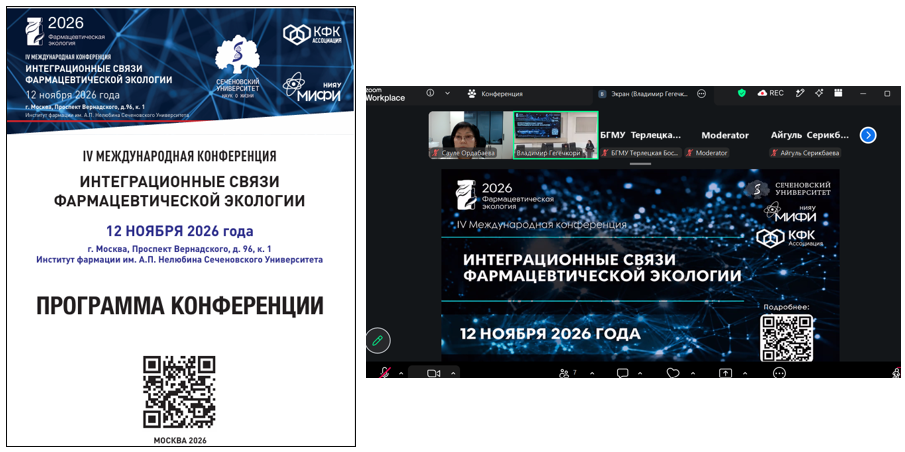
On 12 November 2026, the Fourth International Conference “Integration Links in Pharmaceutical Ecology” was held at the A.P. Nelyubin Institute of Pharmacy of Sechenov University. The event brought together representatives of educational and research organisations and the pharmaceutical sector from Russia, Kazakhstan and Belarus.
The programme addressed sanitary, hygienic and environmental monitoring throughout the life cycle of medicines; the standardisation and environmental safety of plant- and animal-derived raw materials; pharmaceutical pollution of the biosphere; occupational and environmental protection; and the development of environmental education.
The following current topics were discussed in the context of sustainable development programmes:
· government regulation of health-based exposure limits for potentially hazardous chemicals in pharmaceutical manufacturing;
· occupational hygiene monitoring of chemical hazards and occupational risk assessment;
· protecting personnel and the environment from exposure to toxic substances in pharmaceutical manufacturing;
· sources of pharmaceutical pollution in the biosphere, mechanisms of ecotoxicity, and risk-reduction strategies;
· safety assessment of medicinal plant materials, including the monitoring of heavy metal content;
· modern methods for analysing toxicants and approaches to the ecological and pharmacognostic assessment of plant resources.
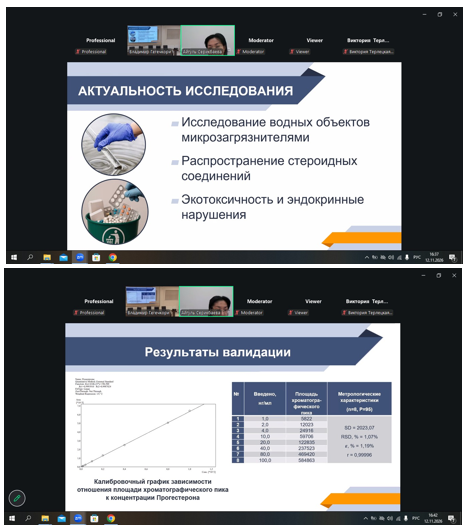
Associate Professor A. D. Serikbayeva presented a paper entitled “Optimisation of Analytical Monitoring of Steroidal Drug Residues in Environmental Matrices” in the session “Medicinal Raw Materials of Plant and Animal Origin: Standardisation and Environmental Safety.” The paper addressed one of the central challenges in pharmaceutical ecology: the detection and monitoring of pharmaceutical pollutants in the environment. The study highlighted the importance of improving analytical approaches to the determination of steroidal drug residues.
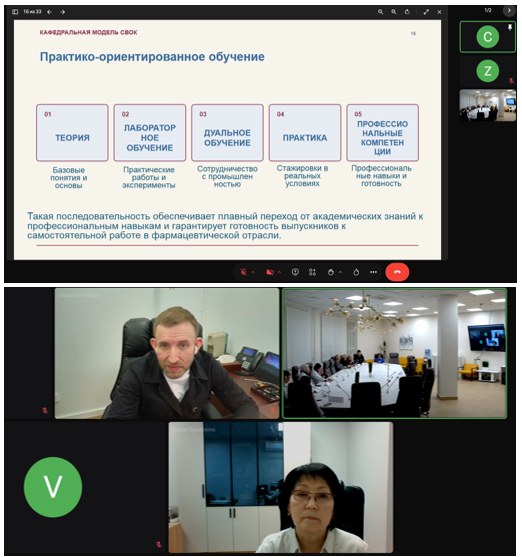
At the round table “Contemporary Challenges and Integration Links in Environmental Education”, Professor S. K. Ordabayeva presented a paper entitled “A Department-Level Model for Internal Quality Assurance of an Educational Programme: The SKMA Experience.” The presentation outlined the Department’s approach to the internal quality assurance of an educational programme. Participants also considered the development of professional competencies among pharmacy specialists through the study of pharmaceutical ecology, the content of relevant disciplines in specialist and master’s programmes, continuity between levels of study, and interdisciplinary integration.
The participation of SKMA representatives provided an opportunity to present the Academy’s research and educational developments internationally, discuss them with colleagues, and compare them with current approaches to pharmaceutical ecology and environmental education. The conference topics are directly related to the research, teaching and methodological work of the Department of Pharmaceutical and Toxicological Chemistry and Pharmacognosy.
The conference materials can inform curriculum updates, support the development of analytical research into the environmental safety of medicines, and expand professional contacts with specialised departments and research organisations.
The SKMA Department of Pharmaceutical and Toxicological Chemistry and Pharmacognosy and the A.P. Nelyubin Institute of Pharmacy of Sechenov University have maintained a productive, long-standing partnership in education and research. Their joint work includes the delivery of the double-degree master’s programme in Pharmaceutical Ecology, academic mobility for faculty members and students, the exchange of teaching, research and methodological expertise, participation in scientific conferences, and discussion of current issues in pharmaceutical education and research.
Thus, during the current academic semester, the SKMA Department took an active part in the scientific and educational forums marking the anniversary of the Institute of Pharmacy. Department representatives delivered papers at two international conferences, presenting the Academy’s research, educational and methodological achievements. As part of the academic mobility programme, SKMA faculty members also taught classes for Sechenov University students and exchanged professional experience with their Russian colleagues.
Participation in the anniversary events continued the established partnership and confirmed both institutions’ shared interest in further developing joint educational initiatives, research projects and academic exchange.