An Educational Lecture for Future Doctors
An educational lecture titled “Honesty Is a Noble Virtue” was held for interns of group ІХҚ-05-26 at the Department of Surgery and Oncology of South Kazakhstan Medical Academy JSC. The lecture was delivered by Berkut U. Pilalov, a lecturer at the department. The event was aimed at strengthening the values of honesty, professional responsibility, integrity, and academic culture among future healthcare professionals.
The content of the lecture was aligned with the principles set out in Academic Policy AP 101-2026 of South Kazakhstan Medical Academy JSC. Section 3 of this document requires the academy’s employees and students to comply with the standards of academic integrity and to contribute to the development of an anti-corruption culture. Attention was drawn to the direct relevance of these requirements to the daily studies and professional conduct of future doctors.
During the lecture, it was explained that honesty is not merely a personal character trait but also one of the core values that determine the quality of medical practice and patients’ trust. Sincerity, fairness, responsibility, confidentiality, and acting according to one’s conscience when making professional decisions are particularly important for a doctor. In clinical practice, these principles are closely connected with respect for patients’ rights and a commitment to providing safe medical care.
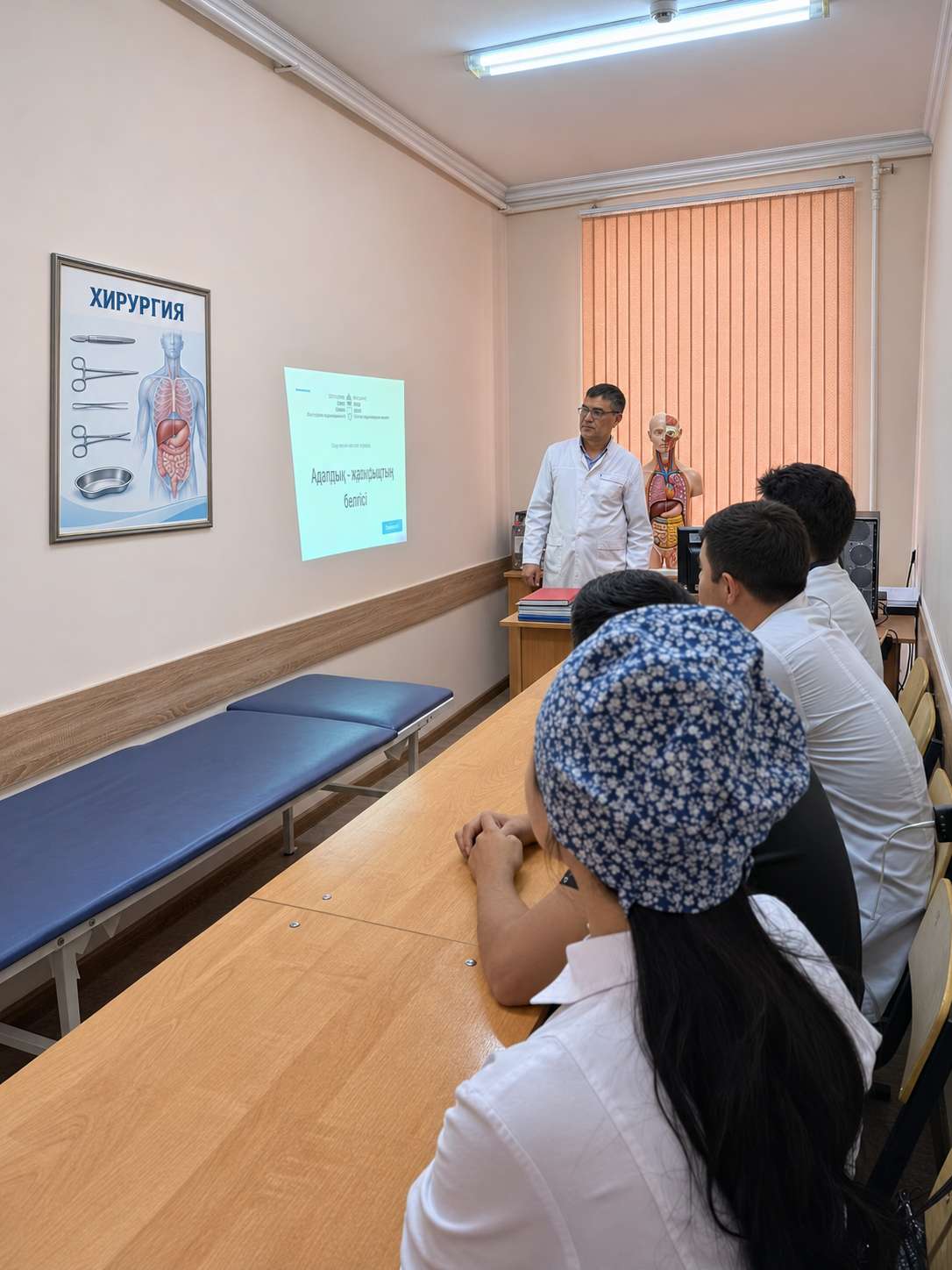
In accordance with the Student Code of Honor set out in Section 4 of the Academic Policy, interns are expected to complete academic assignments independently, demonstrate honesty during assessment, refrain from appropriating the work of others, and avoid all forms of academic misconduct. In particular, it was emphasized that practices such as cheating, plagiarism, and presenting ready-made materials as one’s own work are incompatible with high-quality professional education.
The 2026 Academic Policy also addresses the use of artificial intelligence tools in learning. Students may use artificial intelligence as an assistive tool; however, it must not replace independent thinking, analysis, or completion of assignments. Students remain personally responsible for the accuracy and content of the materials they prepare. For future doctors, this principle highlights the importance of critically evaluating information and relying on evidence-based data.
The lecture also focused on the relationship between academic integrity and medical ethics. While acquiring clinical knowledge and practical skills, interns should assess their abilities objectively, openly seek clarification when they do not know something, strive for accuracy when working with medical documentation, and handle patient information responsibly. The professional reputation of a future specialist is shaped not only by theoretical training but also by the ethical principles demonstrated in everyday conduct.
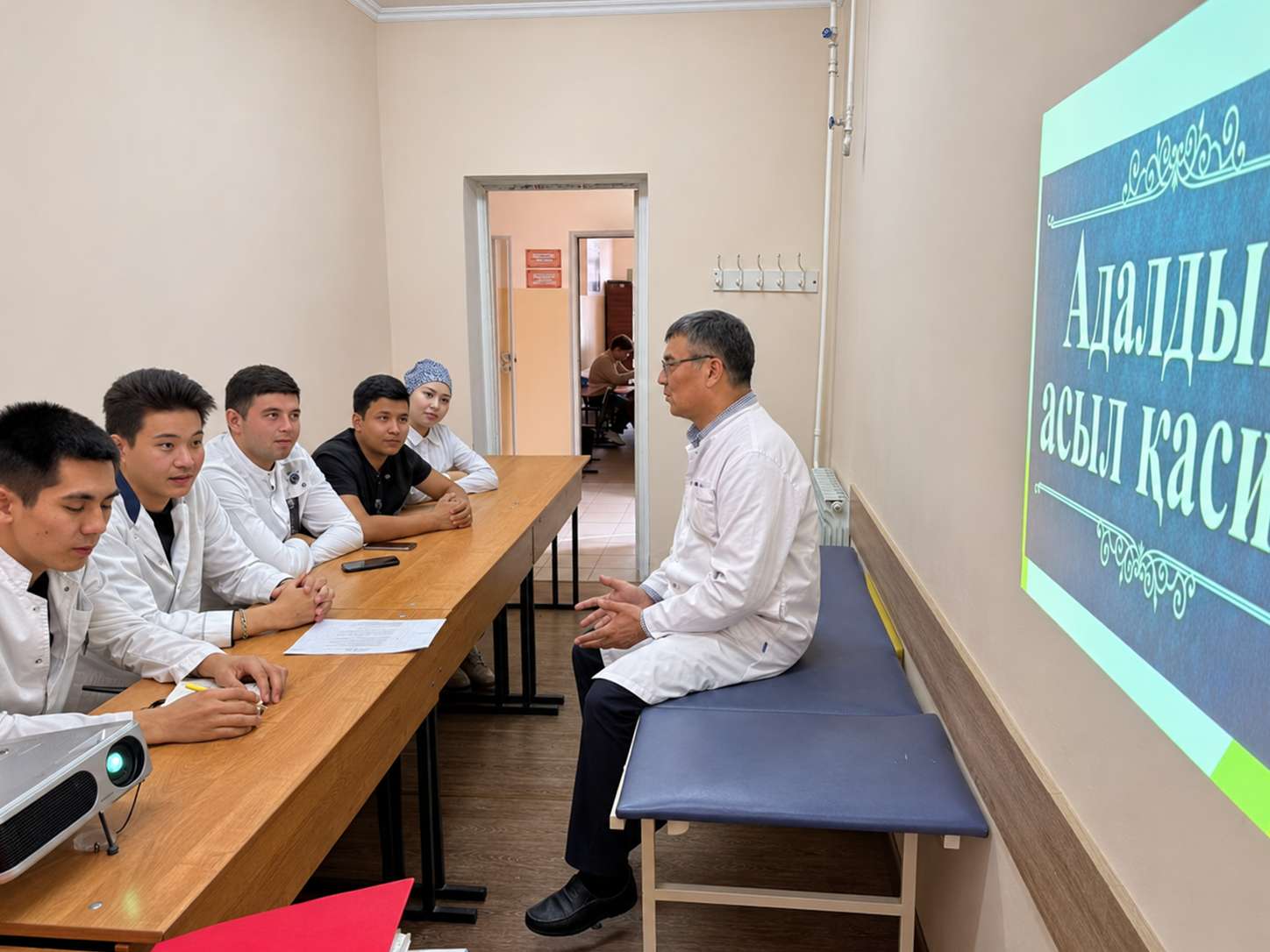
The Faculty Code of Honor in Section 5 of the Academic Policy provides for fair and impartial treatment of students, adherence to professional ethics, and setting a personal example of honesty and responsibility. In this regard, an educational environment based on mutual respect and trust between lecturers and interns is considered an important condition for professional development.
It was also explained that, in accordance with the principles of shared responsibility for learning set out in Section 6, students are expected to attend classes, acquire the necessary theoretical knowledge and practical skills, comply with the academy’s internal regulations, and build relationships with lecturers and staff based on mutual respect.
Such educational lectures are intended to deepen interns’ understanding of academic integrity, foster a conscientious attitude toward the professional duties of a future doctor, and strengthen a culture of trust and responsibility in the medical environment. Following the principles of honesty from the beginning of one’s education is an important prerequisite for training highly qualified healthcare professionals worthy of public trust.
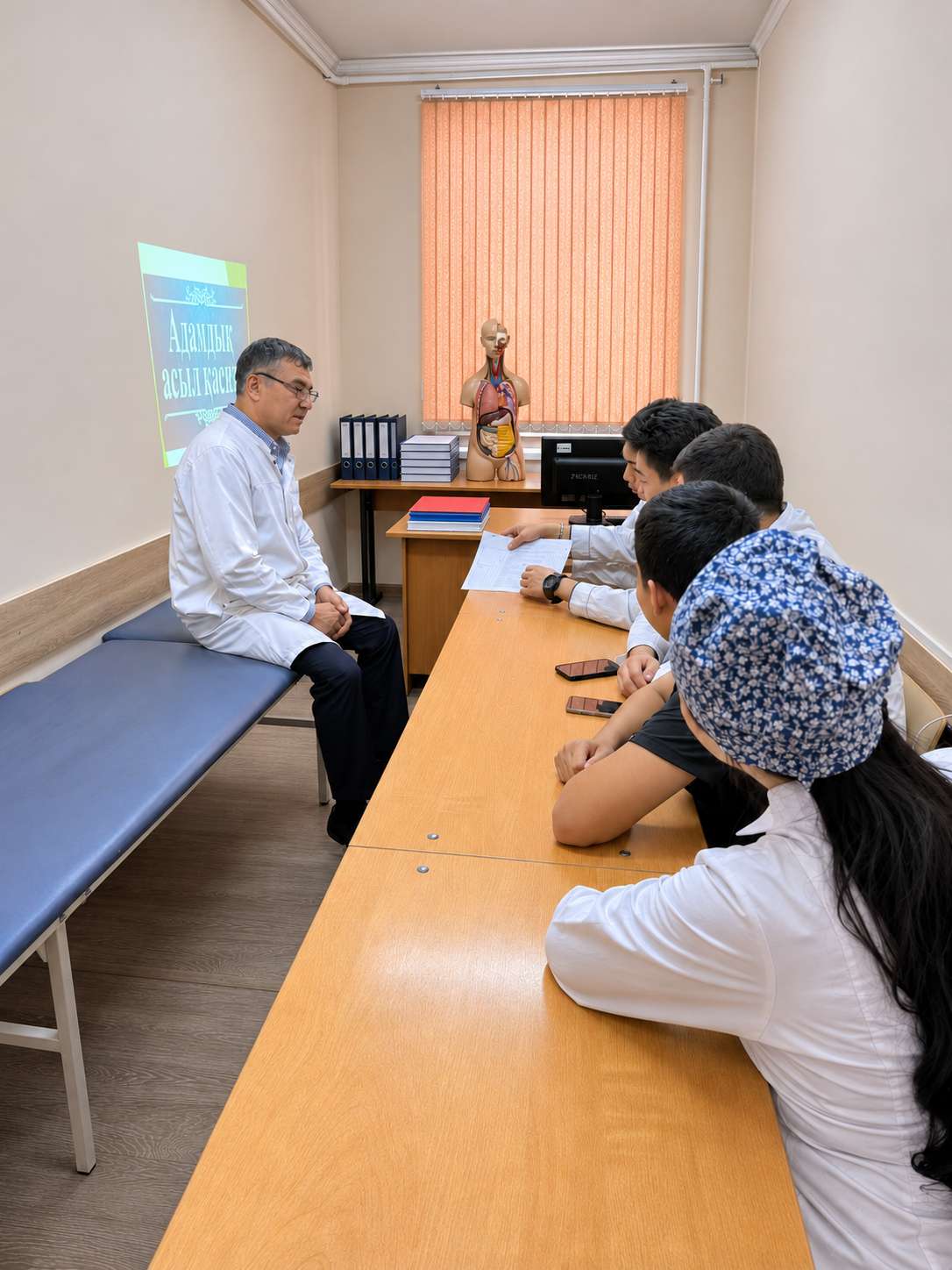
Alongside the professional training of students, the Department of Surgery and Oncology places importance on their ethical values, academic responsibility, and moral character. The lecture “Honesty Is a Noble Virtue” was one example of the department’s educational work in this area.